A Word from The Rector: National Truth & Reconciliation Day

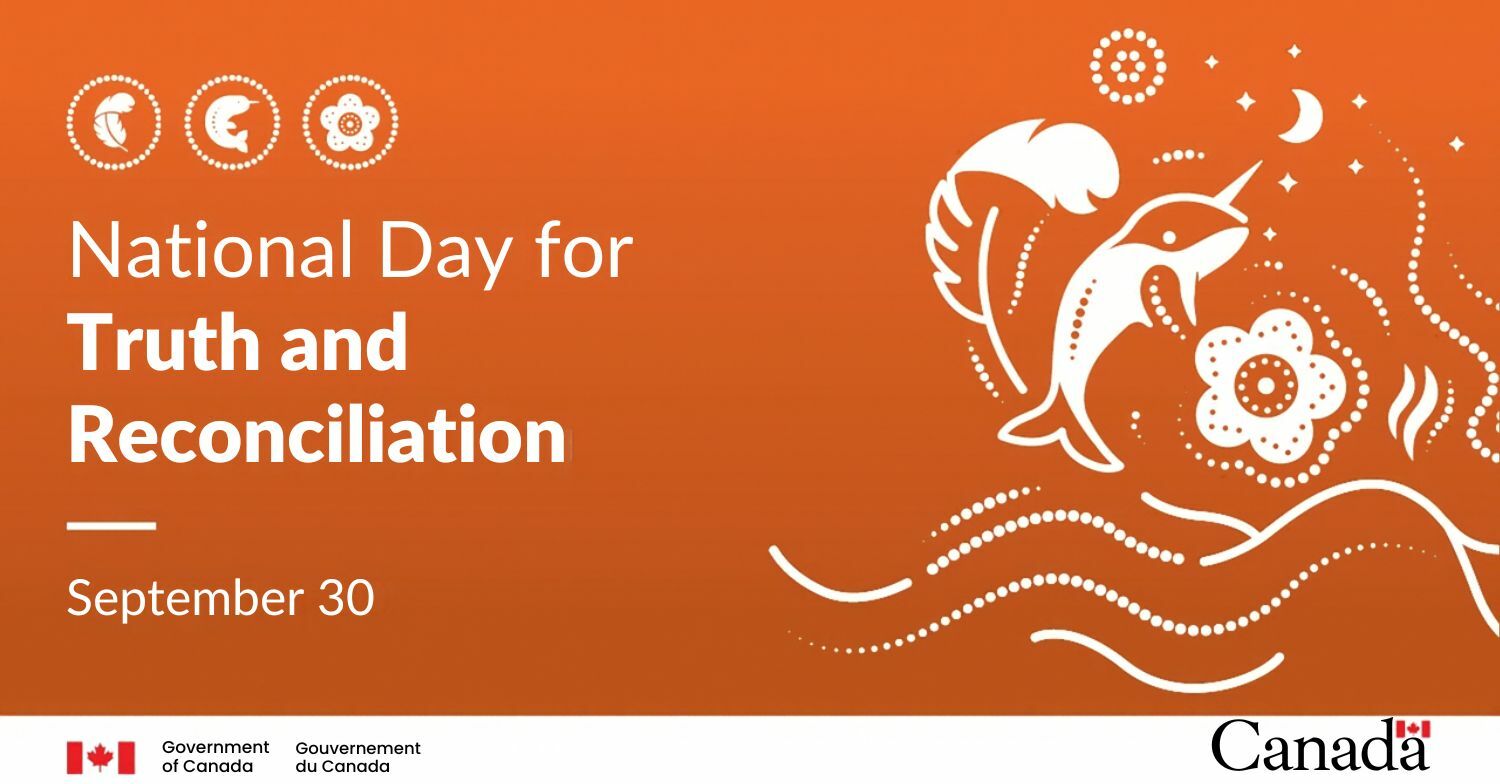
Friends,
As we approach the National Day for Truth and Reconciliation, perhaps its a day that has become something we get through rather than something we engage with. Maybe it comes up at the dinner table and gets changed quickly. Maybe it's easier not to bring it up at coffee hour at all. If that's where you are, I'm not writing to move you somewhere else by Wednesday. Rather I want to think out loud for a few minutes, and leave the door open rather than pushing anyone through it.
Phyllis Webstad has told the story of arriving at residential school as a six-year-old wearing a new orange shirt her grandmother had bought her, only to have it taken away. That memory became the seed of Orange Shirt Day, and it now sits alongside the testimony of many survivors — testimony that has helped this country understand, gradually and often painfully, what residential schools did to the children sent to them.
One of the harder things about truth is that none of us carries all of it. Two people can remember the very same place differently — one may remember kindness, another may remember fear. That's true, and it doesn't need to be argued away. But it's also true that a good memory doesn't make someone else's suffering smaller, and it isn't asked to try. Those two things aren't in tension with each other. The second one just matters more.
Our own Anglican Church has been slow in learning that, and honestly, is still learning it. Archbishop Michael Peers' 1993 apology followed years of survivors speaking before the Church was able to hear them. In 2019, Archbishop Fred Hiltz apologized again — this time for the suppression of Indigenous language, culture, and spiritual life. Neither apology closed the subject. Each one meant the listening was ongoing, and that there was more the Church hadn't yet understood.
I don't say any of that to make anyone feel behind. Most of us inherited our sense of this history the same slow, incomplete way the Church did — a little at a time, often reluctantly, sometimes not at all. That's not a moral failing. It's just where a lot of people actually are, and there's no shame in starting from there.
What I don't think this day is asking of us is guilt, or a verdict on how good or bad anyone's intentions were. While we do have verified accounts of people doing intentional and real harm to children, for no other reason than to inflict harm in those schools, institutions are also made up of real and complicated people. Just as history is also more real and complicated than we can ever fully know.
The harder part of being human, I find, is how real people can be sincere and caring while still being part of something, or working next to someone, that caused real harm. Holding both of those at once isn't a trick, denialism and it isn't a debate to win. It's closer to the ordinary way grief works — it doesn't need everything to balance out, it just asks to be let in.
Paul writes that we know only in part. I find that oddly comforting rather than unsettling — it means none of us was ever going to arrive at this with the whole picture, and being handed more of it isn't a judgment on what we didn't know before.
So as September 30 approaches, perhaps the ask of us isn’t humiliation or shame after all, maybe it's an invitation to life. If you've never read even a page of what survivors have said in their own words, this week might be a quiet, private way to start — no conversation required, no position to defend. And if all you can do this year is notice the day rather than avoid it, that's not nothing.
That's already a small turning.
My door is always open for you,
Alex+